Challenging markets meet resilient companies, many of which are willing to invest and grow despite headwinds
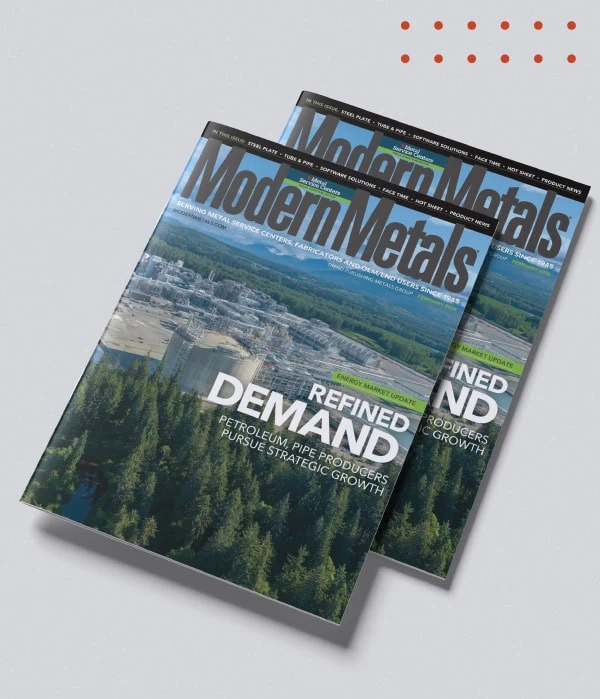
Guest Editorial – Modern Metals Magazine
While 2025 may be remembered as a year of uncertainty, it also showcased the resilience and adaptability that define the metals industry. Firms navigated changes in tariffs, uneven demand in certain industries and other factors—and ended the year on solid footing. A couple of clear themes emerged from discussions with our clients. First, disciplined execution (both commercially and operationally) was essential to performing well this year. Second, the top-performing companies take a longer-term view focused on building their companies and continue to invest in safety, technology, value-added processing and, most importantly, their employees.
TURNING UNCERTAINTY INTO PROGRESS
The industry continues to absorb and react to new market information, particularly around end-use demand and the ongoing impact of tariffs, but companies have focused on their day-to-day activities and the best capital spending and growth opportunities. New areas of demand, such as investment in data center construction and the reshoring of U.S. manufacturing, are beginning to support demand for metals of all kinds. In the past, these projects were often concentrated in specific regions around industrial hubs. Today, new opportunities are taking shape across many regions. Companies are also using this period to make practical changes to adapt to the new landscape. Product diversification, value-added processing and a focus on safety are among the issues at the forefront of industry leaders’ minds as demand patterns shift.
RESILIENCE IN REAL TIME
As has long been the case, metal companies focus on reacting to changes across the supply chain in a manner that makes them a good partner for both their suppliers and their customers. During 2025, additional emphasis was placed on purchasing practices and providing additional value to customers.
A company’s most important investment remains in its people. Continuous improvement, sales development and leadership continuity do not always get consistent attention; however, they matter most when markets change. Organizations that keep building internal capabilities tend to respond faster and scale more effectively without putting pressure on profitability.
REINVESTING THROUGH THE CYCLE
One defining characteristic of the metals industry is that it operates in cycles. Over time, the same pattern shows up: companies that reinvest regularly are better able to protect and grow enterprise value. Those who pull back too aggressively during downturns may benefit in the short term but often lose ground as conditions improve. Deferred maintenance, reduced training and delayed technology upgrades may preserve cash in the short term but tend to result in weaker margins, reduced competitiveness and lower enterprise value down the road.
This can be seen clearly in M&A transactions. Buyers have become increasingly selective, favoring well-maintained, modern operations with a history of disciplined investment. Businesses that have consistently invested in equipment, systems, safety and people tend to command stronger valuations and attract a broader pool of buyers. These are the characteristics of transferable enterprise value that buyers seek, and lenders reward, in both good and uncertain markets.
PLAN FOR THE WORST, BE READY FOR THE BEST
During 2026, we expect most firms to continue to focus on the day-to-day activities that are the foundation of a strong business, such as tight controls and monitoring on inventory, focus on superior service levels for customers, and retention of employees. At the same time, they are also investing in future growth. Committing capital when demand is uneven and external pressures persist is difficult, but it is part of the longer-term cycle that we have seen many times. I’ll leave you with one final thought: in a market with evolving dynamics, standing still and hoping things will improve is very rarely a winning strategy.